By G. A. Finch
In my 08 June 2024 blog post, Federal Trade Commission Rules From on High: The Death Knell of Non-Competes?, I commented on the 23 April 2024 Federal Trade Commission (FTC) final Non-Compete Clause Rule (the “Rule”), which essentially gutted the legal permissibility of the use of non-compete covenants in American business.
The Rule was to take effect on 04 September 2024. Predictably, lawsuits were quickly filed challenging the legality of the Rule. Lawsuits were filed in U.S. districts courts in Texas, Pennsylvania, and Florida.
The FTC duly noted on its website that “[o]n August 20, a district court issued an order stopping the FTC from enforcing the rule that was to go into effect September 4 [and that the] FTC is considering an appeal [and the] decision does not prevent the FTC from addressing noncompetes through case-by-case enforcement actions.”
The most mature and consequential of these federal cases is Ryan, LLC v. Federal Trade Commission filed in the U.S. District Court for the Northern District of Texas. Plaintiff Ryan, LLC was joined by Plaintiff-Intervenors Chamber of Commerce of the United States of America, Business Roundtable, and two other business groups. Clearly, business interests were prepared to push back forcefully against the FTC’s proposed ban.
In the Ryan, LLC case, Judge Ada Brown issued an order and opinion that held:
- “the FTC lacks statutory authority to promulgate the non-compete Rule;
- the Rule is arbitrary and capricious;
- [and thus] the FTC’s promulgation of the Rule is an unlawful agency action;
- [and] setting aside agency action … has ‘nationwide effect’.”
On 19 October 2024, the FTC did in fact file its notice of appeal from Judge Ada Brown’s Ryan, LLC et al. v. Federal Trade Commission decision with the 5th Circuit Court of Appeals. Earlier, on 24 September 2024, the FTC also had filed with the 11th Circuit Court of Appeals its notice of appeal from U.S. District Court for the Middle District of Florida Judge Timothy J. Corrigan’s Properties of The Villages, Inc. v. Federal Trade Commission decision that granted plaintiff injunctive relief. To make the non-compete legal landscape even more slippery, another lawsuit, ATS Tree Services, LLC v. Federal Trade Commission, had been filed against the FTC in the U.S. District Court for the Eastern District of Pennsylvania alleging violations of the Administrative Procedure Act and Article I of the U.S. Constitution and seeking a Stay of Effective Date for the Rule and Preliminary Injunction against the FTC. On 23 July 2024, Judge Kelley B. Hodge denied Plaintiff ATS’s motion because of its failure to establish the likelihood of success on the merits and irreparable harm. The ATS decision has not been appealed. Depending on how the respective U.S. circuit courts of appeals rule in the Ryan, LLC case and in the Properties of the Villages, Inc. case, there could be inconsistent decisions that would have to be resolved at the U.S. Supreme Court level.
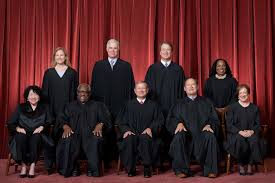
Whether the FTC’s appeals will prevail is in serious question. Anecdotally, it seems that, for a variety of reasons beyond the limited scope of this blog post, more academic and legal pundits than not, believe that the Rule will not overcome judicial invalidation. Having made that observation, it is important to note that there are some states that have prohibited non-competes and still others that have put significant limitations on non-competes. For example, California prohibits non-competes while Illinois allows non-competes with certain restrictions. Accordingly, it would be prudent for employers or businesses to consult a lawyer to ascertain the legal permissibility of their utilizing non-compete clauses in specific states.
Copyright © 2024 by G. A. Finch. All rights reserved. Your Executive Life Blog posts offer no legal advice and should not be construed as legal advice or as a legal opinion on a specific situation for a reader. This general information is not intended to create, and reading and receipt of this information do not constitute, an attorney-client relationship. The information in this blog post should not be used to undertake any action without prior consultation with an attorney.
 Your Executive Life Blog